
Why Is Lakshmi Puja Performed During Pradosh Kaal on Diwali? The Astrological Significance Explained
❤️ Spread the Love
Diwali is a time when homes glow with earthen lamps, families gather for prayers, and Goddess Lakshmi is worshipped for prosperity and well-being. While most people carefully prepare their homes and puja arrangements, there is another important aspect of the celebration that deserves attention: the timing of Lakshmi Puja.
According to Hindu tradition, Lakshmi Puja is performed during Pradosh Kaal, the period immediately following sunset. Astrologically, this time becomes particularly significant when it coincides with a Sthir Lagna, or fixed ascendant.
But why is this specific period preferred for worship? And what connection does it have with stability, wealth, and the blessings of Goddess Lakshmi?
As Diwali 2026 approaches, understanding the significance of Pradosh Kaal can add a deeper meaning to this cherished festival.
Also Read: Choti Diwali and Diwali on the Same Day in 2026
When Is Diwali 2026? Lakshmi Puja Date and Muhurat
Diwali will be celebrated on Sunday, November 8, 2026. The festival falls during the Amavasya Tithi associated with the Hindu month of Kartika in the North Indian calendar.
According to Drik Panchang, the following timings apply to New Delhi:
Event | Date and Time |
|---|---|
Diwali 2026 | November 8, Sunday |
Amavasya Tithi Begins | November 8, 11:27 AM |
Amavasya Tithi Ends | November 9, 12:31 PM |
Pradosh Kaal | 5:31 PM – 8:09 PM |
Lakshmi Puja Muhurat | 5:54 PM – 7:50 PM |
Vrishabha Lagna | 5:54 PM – 7:50 PM |
These timings are specific to New Delhi. Devotees in other cities should consult their local Panchang for the appropriate muhurat.
What Is Pradosh Kaal in Hindu Astrology?
Pradosh Kaal refers to the period that begins after sunset and continues into the early evening. In traditional Hindu timekeeping, it is an important period for various forms of worship.
The word Pradosh is associated with the transition from day to night. As daylight gradually fades and darkness approaches, this time represents a meaningful change in the daily cycle.
In Hindu religious practice, such transitional periods are often considered suitable for prayer, reflection, and spiritual observances.
On Diwali, Pradosh Kaal holds particular importance because Lakshmi Puja is traditionally performed during this period while Amavasya Tithi prevails.
The combination of the lunar date and the evening worship period is central to determining the auspicious Lakshmi Puja muhurat.
Also Read: Govardhan Puja 2026: Why Is It Celebrated Two Days After Diwali?
Why Is Lakshmi Puja Performed During Pradosh Kaal?
1. The Significance of Amavasya
Diwali is observed on Amavasya, the new-moon phase of the lunar calendar. Amavasya is traditionally associated with introspection, ancestral observances, and particular forms of spiritual worship. On Diwali, the lighting of lamps carries an especially powerful symbolic meaning.
The contrast between the dark new-moon night and the illumination of countless diyas represents the movement from darkness towards light, knowledge, and hope.
Worshipping Goddess Lakshmi during the evening of Amavasya is therefore an important part of Diwali's religious tradition.
2. The Importance of the Evening Worship Period
Pradosh Kaal is traditionally regarded as an auspicious period for Lakshmi Puja.
In Hindu belief, Goddess Lakshmi represents not only material wealth but also abundance, well-being, good fortune, and prosperity.
Performing Lakshmi Puja during this period is considered a way of seeking her blessings for a harmonious and prosperous household.
The significance lies in observing the religiously prescribed time with devotion rather than treating the muhurat as a guarantee of financial success.
3. The Connection Between Pradosh Kaal and Sthir Lagna
One of the most interesting astrological aspects of Diwali Lakshmi Puja is the preference for Sthir Lagna.
In Vedic astrology, the twelve zodiac signs are traditionally divided into three categories according to their qualities:
Chara Rashi: Movable signs
Sthir Rashi: Fixed signs
Dwiswabhava Rashi: Dual-natured signs
Taurus (Vrishabha), Leo (Simha), Scorpio (Vrishchika), and Aquarius (Kumbha) belong to the fixed-sign category.
These signs symbolically represent stability, persistence, and continuity.
For Lakshmi Puja, a fixed ascendant is traditionally preferred because devotees seek lasting prosperity and stability within the household.
Why Is Vrishabha Lagna Considered Auspicious for Lakshmi Puja?
Vrishabha, or Taurus, is one of the four fixed signs in Vedic astrology.
It is ruled by Venus, known as Shukra, which is traditionally associated with beauty, comfort, luxury, and material enjoyment.
The fixed nature of Taurus gives it an additional symbolic association with stability.
During Diwali, Vrishabha Lagna frequently overlaps with Pradosh Kaal, making it a preferred time for household Lakshmi Puja.
According to traditional belief, performing Lakshmi Puja during Sthir Lagna expresses the wish that prosperity and good fortune remain stable within the home.
However, this is a religious and astrological interpretation, not a scientifically established relationship between planetary positions and financial outcomes.
Is Pradosh Kaal Better Than Mahanishita Kaal for Diwali Puja?
Both Pradosh Kaal and Mahanishita Kaal are mentioned in discussions of Diwali worship, but they are associated with different practices.
Pradosh Kaal: This is generally recommended for household Lakshmi Puja. It occurs shortly after sunset and is commonly selected when a fixed ascendant is also present.
Mahanishita Kaal: This refers to a period around midnight and is particularly associated with certain specialised religious and Tantric worship traditions.
For most families performing regular Lakshmi-Ganesh Puja at home, Pradosh Kaal is the commonly recommended choice.
Regional traditions and family customs may differ, so devotees can also follow the guidance of their family priest.
Also Read: Dhanteras 2026: Does Buying Gold and Silver Really Invite Wealth and Good Fortune?
How to Prepare for Lakshmi Puja During Pradosh Kaal
Although the muhurat is an important consideration, the way the worship is performed also holds religious significance.
Begin by cleaning the puja area and arranging the necessary materials before the auspicious period begins.
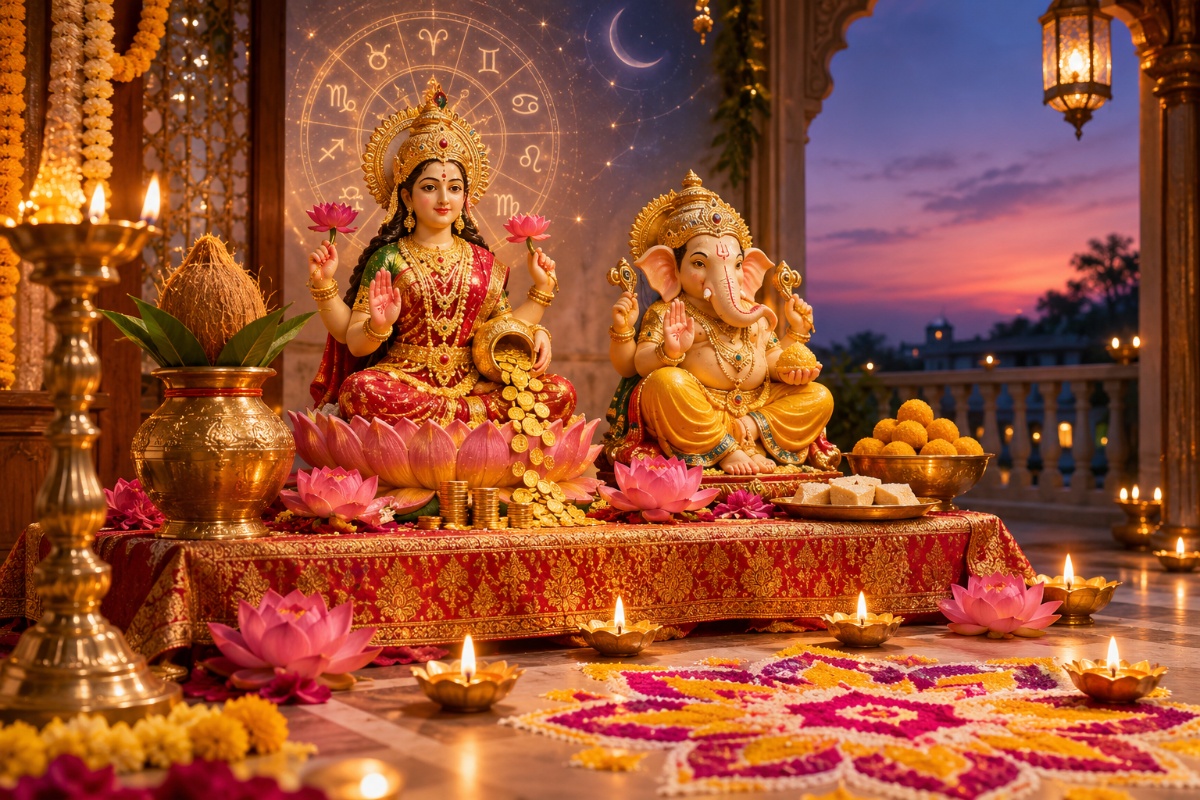
Place the idols or images of Goddess Lakshmi and Lord Ganesha on a clean, elevated platform. Decorate the space with fresh flowers, rangoli, and traditional lamps.
Prepare the puja thali with commonly used offerings such as flowers, kumkum, rice, sweets, and a diya.
Families may follow their customary Lakshmi Puja Vidhi, including prayers, offerings, and aarti.
The traditional Shodashopachara Puja involves sixteen forms of worship, although simpler household practices are also widely followed.
Throughout the rituals, devotion, cleanliness, and a peaceful atmosphere remain central to the celebration.
The Spiritual Meaning of Lakshmi Puja Beyond Wealth
Goddess Lakshmi is commonly associated with wealth, but Hindu tradition presents prosperity as a much broader concept.
A prosperous life may include good health, knowledge, supportive relationships, meaningful work, and peace within the family.
Diwali offers an opportunity to reflect on these different dimensions of abundance.
The tradition of cleaning homes before Diwali can be understood as a symbolic preparation for renewal. Lighting diyas represents hope and awareness, while sharing sweets and gifts strengthens social relationships.
From this perspective, Lakshmi Puja is not merely a ritual seeking financial abundance. It is also an expression of gratitude for what one already has and a prayer for balance in the year ahead.
Conclusion
The importance of Pradosh Kaal during Diwali is deeply rooted in Hindu religious tradition and Panchang-based muhurat calculations. The combination of Amavasya, the evening worship period, and Sthir Lagna gives Lakshmi Puja its distinctive astrological significance.
For Diwali 2026, devotees in New Delhi can perform Lakshmi Puja during the recommended muhurat of 5:54 PM to 7:50 PM on November 8.
Beyond the precise timing, the festival remains a celebration of light, gratitude, wisdom, and the hope for lasting prosperity. As families welcome Goddess Lakshmi this Diwali, the deeper message of the festival is worth remembering: true abundance is not measured only by what we possess, but also by the peace, generosity, and harmony we bring into our lives.
Frequently Asked Questions
Why is Lakshmi Puja performed during Pradosh Kaal?
What is the Lakshmi Puja muhurat on Diwali 2026?
What is Sthir Lagna in astrology?
Why is Vrishabha Lagna preferred for Diwali Puja?
Can Lakshmi Puja be performed after Pradosh Kaal?
Does performing Lakshmi Puja at the correct muhurat guarantee wealth?
About the Author
Himanshu Mishra
@himanshu.mishra@paymeindia.in
View all posts →