
Why Is This Tree Worshipped on Dussehra? The Meaning Behind Shami Puja
❤️ Spread the Love
For most people, Dussehra brings to mind a crowded ground, a towering Ravana effigy and the moment everyone waits for—the first arrow of fire.
At home, the celebration can look quite different. There may be a puja to finish, elders to visit and, in some families, a Shami tree to worship.
The tree rarely gets the attention that the larger celebrations do. Yet its place in the festival raises an interesting question. Why is Shami connected with Vijayadashami, and why does its name also come up when people talk about Shani Dev?
The answer lies in two strands of belief that have become part of the same devotional practice.
Shami’s Place in Vijayadashami
The traditional explanation takes us to Arjuna’s period of exile. According to the account associated with Shami worship, he concealed his weapons in the tree while living in disguise. Drik Panchang identifies this connection when describing the significance of Shami on Vijayadashami.
For devotees, this gives the tree a place in a festival that celebrates victory. Prayers offered near it are associated with seeking strength and blessings before facing challenges.
The custom also has regional identities. In some southern traditions, Shami worship is called Banni Puja or Jammi Puja. The names differ, but the tree remains part of the religious observances surrounding Dussehra.
Knowing this background changes how we see a simple act of worship. A tree standing quietly near a home or temple carries a connection with a much larger story.
Also Read: Why Do These Places Remember Ravana Differently on Dussehra?
The Connection With Shani Dev
Shami also holds significance in Hindu astrological traditions through its association with Shani Dev. Religious accounts describe worshipping the tree as a practice followed by devotees seeking relief from difficulties attributed to Saturn. Some mention Saturday prayers and lighting a mustard-oil diya near it.
This is why Shami is often discussed in articles about Shani-related remedies.
However, its presence in Dussehra worship has a broader background. A family may observe Shami Puja because it is part of its annual celebration, without connecting it to anyone’s birth chart. Another person may approach the same practice with a prayer to Shani Dev.
Both associations help explain the tree’s importance. Neither means that every person who worships Shami must be experiencing an unfavourable planetary period.
Can Shami Puja Change Your Luck?
This question often follows any discussion of an astrological remedy. People usually look for remedies when something feels uncertain. A job search has gone on longer than expected. Expenses keep arriving. Plans are repeatedly delayed. In that situation, a promise of quick relief can be appealing.
Shami worship is traditionally associated with prayers for blessings, protection, and relief. These are matters of faith, rather than proven effects.
Performing the ritual does not guarantee that a specific problem will disappear. It should also not be described as a way to end Sade Sati or change the timing of a planetary transit.
If you follow the practice, you can do so with devotion while continuing to address the practical circumstances of your life. A prayer does not require you to put your decisions, responsibilities or efforts on hold.
Why Do Some Families Preserve Shami Leaves?
You may have noticed leaves being placed carefully near the family deity or kept after the Dussehra puja.
Some religious descriptions connect preserving Shami leaves with wishes for prosperity and protection. They also mention keeping them in a place where money is stored. Within a household that follows this belief, the leaves are treated as part of the worship. Their significance comes from that sacred association.
Calling them a symbol of prosperity is different from claiming they will bring money. The former explains a tradition; the latter promises an outcome that cannot be assured.
Shami and Apta Are Often Confused
Before following a custom involving leaves, it helps to identify the tree correctly.
Shami and Apta are different trees. In Maharashtra, Apta leaves are commonly exchanged as symbolic “gold,” or sona, during Dussehra. Shami worship is another observance associated with the festival.
Because both appear in discussions about Vijayadashami, their names sometimes get mixed up. That can lead to confusion about which leaves are used in a particular family or regional practice.
If your household exchanges leaves, ask an elder which tree they come from and how the custom is followed. Local knowledge can be especially helpful here.
Also Read: Navratri 2026: Can You Perform Kalash Sthapana in a Rented House or PG?
How Should You Approach Shami Puja?
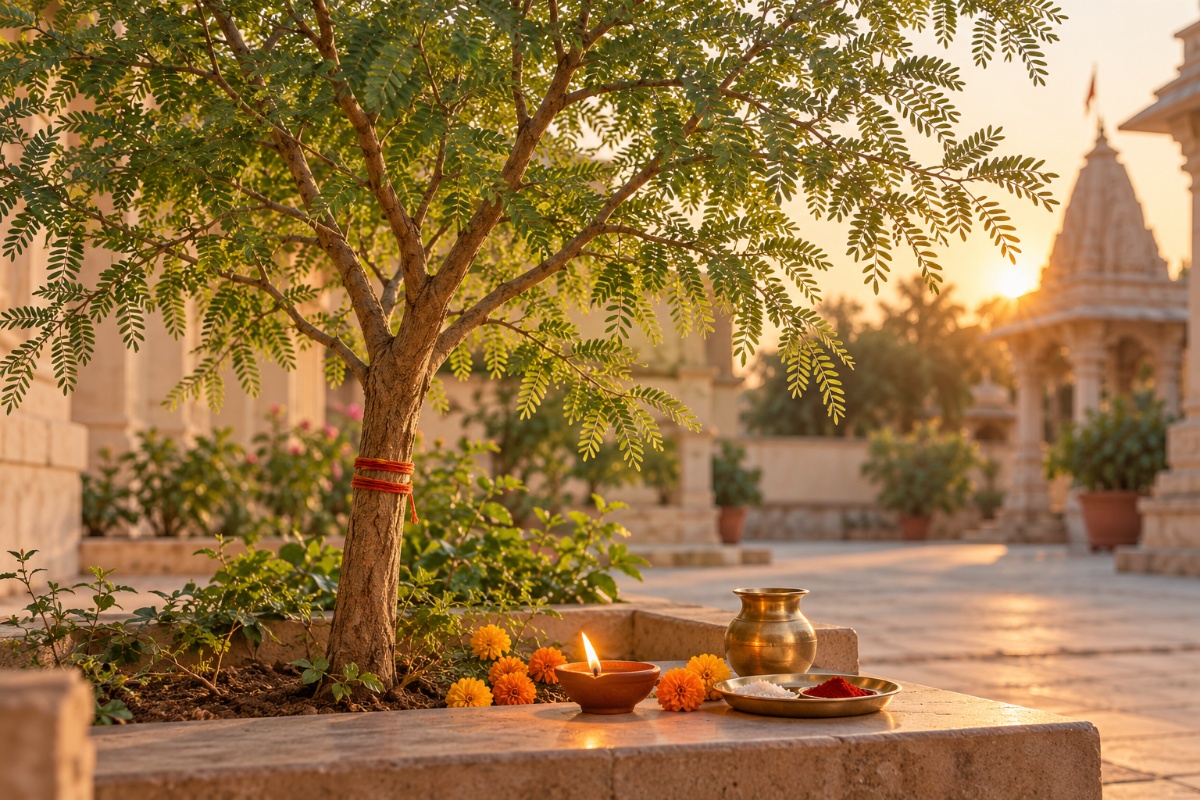
Begin with the tradition followed by your family or local temple. Religious descriptions include offering clean water, lighting a diya and praying respectfully near the tree
There are differences in guidance about timing. Drik Panchang places Shami Puja among Vijayadashami’s afternoon observances, while some religious coverage describes worship in the evening. Follow the guidance relevant to your community rather than treating every online instruction as compulsory.
If you light a diya, keep it away from dry leaves and do not leave it unattended.
Learning the meaning of the practice can be as valuable as learning its steps. Before the next puja, ask why your family observes it. The answer may connect you with a religious story, a prayer to Shani Dev or a custom passed down by someone you remember.
That understanding gives you something meaningful to carry forward when it is your turn to explain the tradition.
Frequently Asked Questions
Why is Shami worshipped on Dussehra?
What is Shami’s connection with Shani Dev
Does keeping Shami leaves guarantee prosperity?
Are Apta leaves and Shami leaves the same?
About the Author
Himanshu Mishra
@himanshu.mishra@paymeindia.in
View all posts →