
Pitru Paksha 2026: 5 Things Not to Do at Home
❤️ Spread the Love
Pitru Paksha is not just about performing rituals—it is a time to pause, remember your ancestors and reconnect with family traditions. But before this important period begins, there are a few things that many families prefer to take care of at home.
In Hindu tradition, Pitru Paksha is dedicated to honouring departed ancestors through practices such as Shraddha, Tarpan, Pind Daan and charity. For many families, it is a period of remembrance, gratitude and spiritual reflection.
In 2026, Pitru Paksha is observed around late September to early October, with Sarva Pitru Amavasya marking its conclusion. Exact dates and timings can vary based on the location and Panchang followed, so checking the local Panchang is important before planning a specific ritual.
While there are several customs associated with Pitru Paksha, the focus should not be on fear or superstition. Instead, you can use this period to follow your family traditions with awareness and sincerity.
Here are five things you should avoid doing before Pitru Paksha begins.
1. Don't Leave Your Home Cluttered and Unclean
A clean home is often considered an important part of preparing for religious observances.
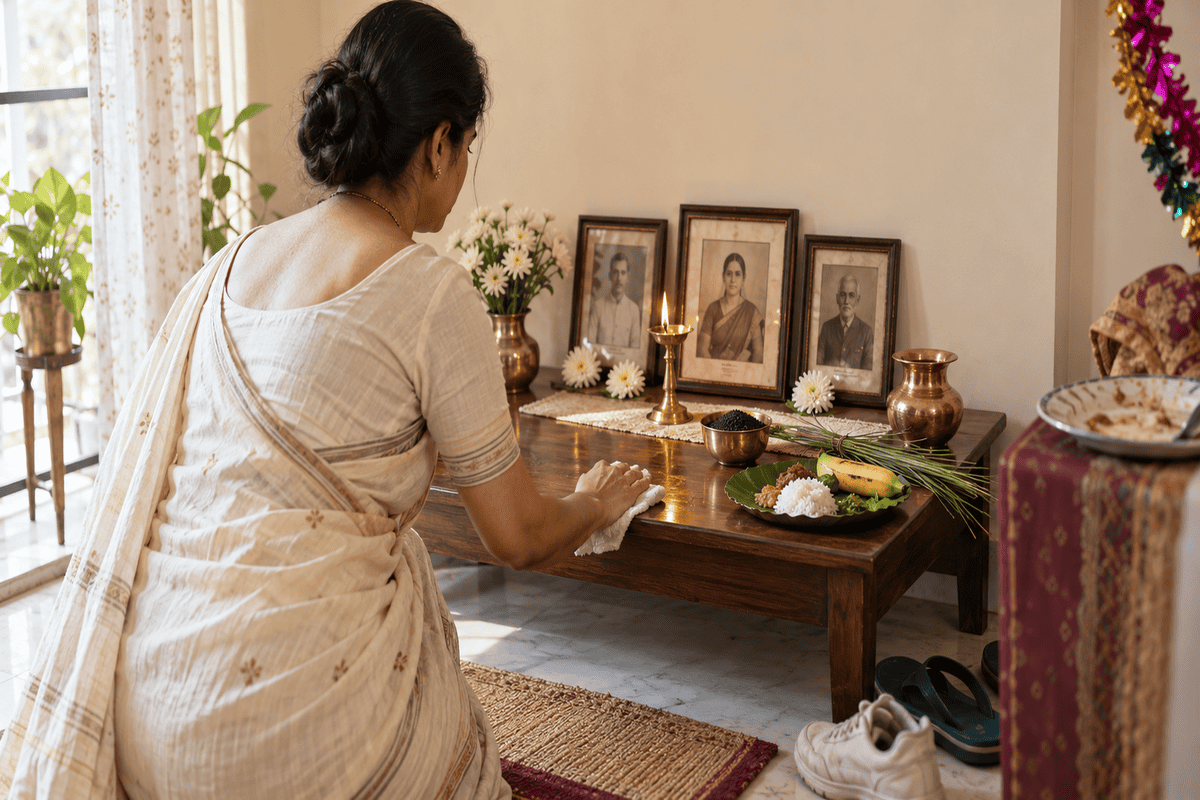
Before Pitru Paksha begins, take some time to clean your home, organise your belongings and pay special attention to the puja room or prayer space. If your family performs Shraddha or Tarpan at home, prepare that area in advance as well.
There is no need to make expensive changes or completely transform your home. Even simple cleaning and decluttering can make the space feel more peaceful and organised.
Before Pitru Paksha, you can:
Clean your puja or prayer area.
Remove unnecessary clutter.
Organise religious items.
Clean the areas where rituals may be performed.
Keep the materials required for your observances ready.
The purpose is not to create a picture-perfect home. It is about creating a calm and respectful environment where family members can focus on remembrance and prayer.
2. Don't Let Unnecessary Conflicts Take Over the Home
Pitru Paksha is traditionally associated with remembering ancestors and expressing gratitude towards them. Naturally, many families prefer to keep the atmosphere at home calm during this period.
That makes it a good time to consciously avoid unnecessary arguments, harsh words and conflicts that can easily be resolved through communication.
It can also be an opportunity to spend time with parents, grandparents and other older family members. They may have stories about your ancestors, family customs and traditions that younger generations have never heard.
Sometimes, understanding your roots is as meaningful as performing a ritual.
So, instead of allowing small disagreements to dominate the household, try to make space for patience, respect and family conversations.
3. Don't Ignore the Correct Shraddha Tithi
One of the most important things to check before Pitru Paksha is the Shraddha Tithi of the ancestor you wish to honour.
Pitru Paksha has multiple Tithis, and the appropriate day for performing Shraddha may depend on the lunar Tithi associated with the person's passing.
This is why simply marking the beginning and ending dates of Pitru Paksha on your calendar may not be enough.
The Hindu calendar follows lunar calculations, so the corresponding dates can change from year to year. Regional practices and Panchang calculations may also differ.
What should you check?
The ancestor's death Tithi.
The corresponding Shraddha date.
Local Panchang timings.
Relevant Muhurat, if applicable.
Your family's traditional practices.
If you are unsure about the correct Tithi or ritual procedure, consult a qualified priest or astrologer who understands your family's tradition.
Using a reliable Panchang can also help you keep track of Tithis, Nakshatras and important dates.
4. Don't Confuse Tradition With Unnecessary Show
Pitru Paksha is often associated with Shraddha, offerings and charity. However, observing the period does not necessarily mean spending beyond your means.
For many families, the essence of these traditions lies in Shraddha—or sincere remembrance and respect—rather than the size or cost of a ceremony.
If you follow the tradition of offering food or donating to those in need, you can do so according to your circumstances.
You may choose to:
Offer food as part of your family tradition.
Donate food or essential items.
Help someone who needs support.
Contribute to a charitable cause.
Support elderly people.
Remember your ancestors through prayer.
The important thing is to observe your traditions sincerely and within your means.
Pitru Paksha does not need to become a source of financial pressure. Its significance can be found in remembrance, gratitude and giving.
5. Don't Assume Every Problem Is Because of Pitra Dosh
This is perhaps the most important point when discussing Pitru Paksha and astrology.
You may have come across claims that financial problems, career setbacks, delayed marriage, family disputes or repeated obstacles automatically indicate Pitra Dosh.
That conclusion should not be made so quickly.
From an astrological perspective, Pitra Dosh is assessed by examining a person's birth chart or Kundli and studying relevant planetary placements and combinations. A single problem in life cannot, on its own, establish the presence of Pitra Dosh.
Your complete Kundli provides a broader picture of planetary positions at the time of birth.
So, if you are concerned about Pitra Dosh, avoid relying on generic social media posts or lists of so-called “symptoms”. Instead, consider getting your birth chart analysed properly.
With Viranchi, you can explore your Kundli and Pitra Dosh to understand the astrological aspects of your birth chart in greater detail.
What Should You Do Before Pitru Paksha 2026?
Preparing for Pitru Paksha can be simple. You don't have to overcomplicate it.
Clean your home
Give your home and prayer area a thorough cleaning and remove unnecessary clutter.
Check your Shraddha Tithi
Find out the appropriate Tithi for the ancestor you want to honour and confirm the relevant timing through a Panchang.
Follow your family traditions
Different regions, communities and families may have different customs. Follow the traditions that are appropriate for your family.
Prepare in advance
If you plan to perform Shraddha, Tarpan or another ritual, arrange the necessary items beforehand instead of waiting until the last moment.
Keep the atmosphere peaceful
Use this period as an opportunity to spend meaningful time with your family and remember your ancestors.
Don't jump to astrological conclusions
If you are worried about Pitra Dosh, look at your complete Kundli rather than attributing every challenge in life to one astrological factor.
Why Is Pitru Paksha Important?
For generations, Pitru Paksha has provided families with a dedicated period to remember their ancestors.
Beyond religious rituals, it can also be viewed as a reminder of family, heritage and gratitude. Stories about ancestors, family traditions and values often pass from one generation to another during such occasions.
For those who follow Vedic traditions, Shraddha and Tarpan hold spiritual significance. For others, Pitru Paksha can also be an opportunity to reflect on their family history and the people whose lives shaped the generations that followed.
The way Pitru Paksha is observed can differ from one family to another, and there is no single practice that applies identically to everyone.
Pitru Paksha Is a Time for Remembrance, Not Fear
With so much astrology content available online, it is easy to become worried about every small incident during Pitru Paksha.
But there is no need to approach this period with fear.
Instead, focus on the core values associated with the occasion: remembrance, gratitude, respect for elders, charity and family traditions.
And when it comes to astrology, remember that a proper interpretation requires context. Pitra Dosh should not be determined from a single life event or a generic checklist. A detailed Kundli analysis can offer a more personalised understanding.
Prepare for Pitru Paksha With Awareness
Pitru Paksha offers an opportunity to slow down, remember your ancestors and reconnect with traditions that have been passed down through generations.
Before it begins, keep your home organised, confirm the relevant Shraddha Tithi, follow your family's customs and approach the period with sincerity rather than fear.
And if you are curious about Pitra Dosh, don't rely on assumptions or generic predictions. Your Kundli can provide a more personalised perspective on the planetary combinations present at the time of your birth.
Explore your Kundli, check the Panchang and learn more about Pitra Dosh with Viranchi.
Frequently Asked Questions
When is Pitru Paksha in 2026?
What should I do before Pitru Paksha?
Can I perform Shraddha if I don't know the ancestor's exact death date?
Does having problems in life mean I have Pitra Dosh?
How can I check Pitra Dosh in my Kundli?
About the Author
Himanshu Mishra
@himanshu.mishra@paymeindia.in
View all posts →