
Diwali 2026: Remove These 7 Things from Your Home Before Lakshmi Puja
❤️ Spread the Love
Diwali is not just about decorating homes with beautiful lights, preparing sweets, and exchanging gifts. In Hindu traditions, the festival also represents new beginnings, prosperity, and the victory of light over darkness. But did you know that certain things kept inside your home are traditionally considered inauspicious during Diwali?
According to popular Vastu Shastra beliefs, a clean and well-organised home is associated with positive energy, peace, and prosperity. This is one reason why families begin cleaning their houses several days before Diwali.
Diwali 2026 will be celebrated on Sunday, November 8, when devotees across India will worship Goddess Lakshmi and Lord Ganesha.
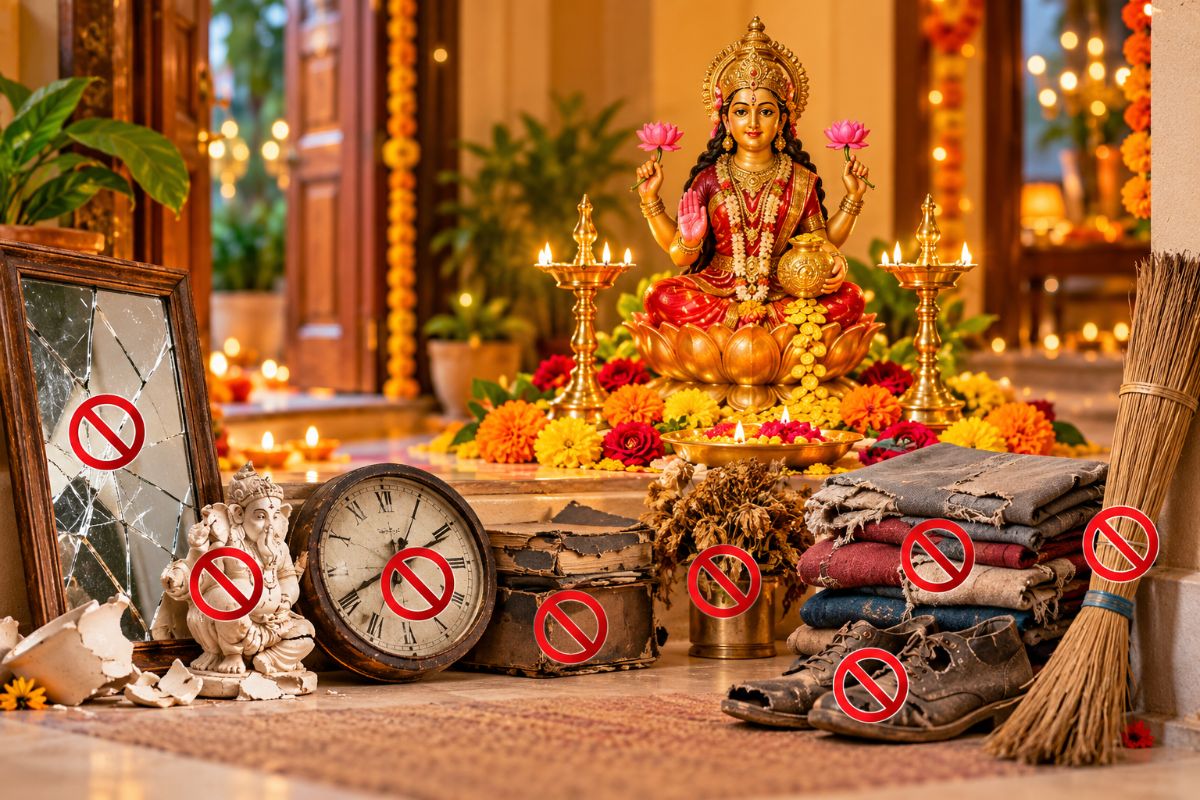
Before you begin decorating your home, here are seven things that traditional Vastu beliefs suggest removing, repairing, or replacing before Lakshmi Puja.
Why Is Cleaning the House Before Diwali Considered Auspicious?
In Hindu tradition, Goddess Lakshmi is associated with wealth, fortune, prosperity, and auspiciousness. Cleaning and decorating the home before Diwali is considered a symbolic way of welcoming her blessings.
From a Vastu perspective, cleanliness, natural light, and organised surroundings are associated with harmony and positivity.
The tradition of Diwali cleaning also carries a deeper meaning. Removing unnecessary belongings can symbolise letting go of negativity, past difficulties, and obstacles.
However, these associations are rooted in religious and cultural beliefs, rather than scientifically established effects on wealth or fortune.
Also Read: Can Your Name Sign and Birth Sign Be Different?
1. Broken Mirrors and Damaged Glass Items
Do you have a cracked mirror or damaged glass decoration that you have been planning to replace?
According to common Vastu beliefs, broken mirrors and damaged glass objects are considered inauspicious because they symbolise disturbance and imbalance.
Mirrors are often associated with reflection and the movement of energy in traditional Vastu interpretations. A cracked mirror is therefore viewed by some practitioners as an unfavourable element in the home.
What should you do?
Replace cracked or broken mirrors.
Remove damaged glass decorations that cannot be repaired.
Dispose of broken glass safely to prevent injuries.
Apart from traditional beliefs, replacing damaged glass items also helps create a safer and more pleasant living environment.
2. Broken Idols and Damaged Religious Pictures
The home temple is an important place of worship for many Hindu families, especially during Diwali.
According to several traditional religious customs, damaged idols or severely deteriorated religious pictures should not be used for regular worship.
These beliefs arise from the importance given to maintaining the sanctity and respectful presentation of sacred objects.
What should you do?
Carefully examine the idols and religious pictures in your home temple before Diwali. If an idol is damaged, consult a knowledgeable priest or follow your family's established tradition regarding its respectful repair, replacement, or retirement from worship. Avoid casually throwing sacred objects into household garbage or immersing non-biodegradable materials in rivers.
Remember that practices concerning damaged idols differ among Hindu communities and should not be treated as universal rules.
Also Read: Wrong Birth Time in Your Kundli?
3. Stopped Clocks and Non-Working Watches
Have you noticed a clock in your home that stopped working months ago?
In popular Vastu interpretations, a stopped clock is believed to symbolise stagnation or interrupted progress.
Some practitioners associate working clocks with movement, consistency, and the passage of time.
For this reason, repairing or replacing stopped clocks is often recommended during pre-Diwali cleaning.
What should you do?
Replace dead batteries in wall clocks.
Repair watches and clocks that have stopped working.
Recycle or dispose of non-functional electronic items responsibly.
Although there is no scientific evidence that a stopped clock affects financial prosperity, keeping functional household items can make your living space more organised.
4. Broken Furniture and Unused Household Items
Old chairs, damaged tables, unused electronic devices, and piles of unwanted belongings often occupy valuable space inside the home.
According to traditional Vastu beliefs, excessive clutter is associated with stagnant or unbalanced energy.
Diwali is therefore considered an appropriate time to repair damaged furniture and clear unnecessary belongings.
What should you do?
Start by examining the areas of your home that tend to collect clutter.
Repair furniture that can still be used, donate belongings in good condition, and recycle items that have reached the end of their useful life.
Pay particular attention to entrances, hallways, and living spaces.
A well-organised home can also make everyday activities easier and reduce visual clutter.
5. Dried Flowers and Dead Plants
Flowers and greenery play an important role in many Hindu festivals.
Fresh flowers are commonly used during religious ceremonies, while plants are often associated with growth, freshness, and vitality.
According to popular Vastu beliefs, dried flowers and dead plants should not be left unattended in the home, particularly around the puja area.
They are sometimes interpreted as symbols of neglect or declining vitality.
What should you do?
Remove old garlands from the home temple respectfully.
Compost biodegradable flowers wherever possible.
Replace dead plants with healthy ones.
Clean flowerpots and remove stagnant water.
Fresh flowers and healthy plants can make your home feel more welcoming during the festive season.
6. Torn Clothes and Damaged Footwear
Another common recommendation associated with Diwali cleaning is to examine old clothes and footwear.
In some traditional household beliefs, keeping excessive amounts of torn, unusable, or neglected belongings is associated with disorder and stagnation.
However, this does not mean that wearing old clothes or owning repaired belongings brings bad luck.
The underlying idea is to maintain cleanliness and avoid unnecessary accumulation.
What should you do?
Sort your wardrobe before Diwali. Donate wearable clothes, mend garments that can be repaired, and recycle textiles that are no longer usable.
Similarly, organise your footwear and avoid leaving damaged shoes scattered near the main entrance. The purpose should be responsible decluttering rather than unnecessary spending.
Also Read: Ahoi Ashtami 2026
7. Broken Brooms and Worn-Out Cleaning Tools
Did you know that the broom has a symbolic association with Goddess Lakshmi in several Indian household traditions?
Because the broom is used to remove dust and dirt, it is sometimes connected with cleanliness and prosperity.
In certain regional customs, special importance is attached to buying or replacing a broom around Dhanteras and Diwali.
Some families also observe specific beliefs about where brooms should be kept and when they should be used.
What should you do?
Replace cleaning tools that are no longer functional and keep usable brooms in a clean, designated storage area.
You do not need to discard a perfectly good broom simply because Diwali is approaching.
Customs involving brooms vary across regions, so following your family's tradition is perfectly appropriate.
Which Areas of Your Home Deserve Special Attention Before Diwali?
Removing unnecessary belongings is only one part of Diwali preparation. Traditional Vastu guidance also places importance on keeping certain household areas clean and organised.
Main Entrance
In Vastu Shastra, the main entrance is considered an important part of the home.
Before Diwali, clean the entrance, remove unnecessary obstacles, and ensure the doorway is well-maintained.
Decorations such as rangoli, flowers, and torans are commonly used to welcome guests and symbolically invite auspiciousness.
North-East Direction (Ishan Kon)
The north-east direction, known as Ishan Kon, holds special significance in many Vastu traditions.
It is often associated with spirituality, prayer, and tranquillity.
Keeping this area clean, well-lit, and free from unnecessary clutter is considered desirable in traditional Vastu practice.
Home Temple
Before Lakshmi Puja, clean the puja area carefully.
Organise the worship materials, replace dried flowers, and ensure that lamps and other accessories are in good condition.
A clean and peaceful prayer space can make festive worship more comfortable and meaningful.
Diwali 2026: Date and Lakshmi Puja Muhurat
Diwali will be observed on Sunday, November 8, 2026.
According to Drik Panchang, the Lakshmi Puja timings for New Delhi are:
Diwali Date: November 8, 2026
Day: Sunday
Lakshmi Puja Muhurat: 5:54 PM to 7:50 PM
Pradosh Kaal: 5:31 PM to 8:09 PM
Amavasya Tithi Begins: 11:27 AM on November 8
Amavasya Tithi Ends: 12:31 PM on November 9
These timings are specific to New Delhi. Devotees in other cities should refer to their local Panchang for accurate puja timings.
Conclusion
Diwali celebrates light, hope, prosperity, and new beginnings. Preparing your home before the festival isn't just about following traditional Vastu beliefs; it's also a chance to create a cleaner, safer, and more welcoming environment.
From repairing broken mirrors to organising the home temple, small preparations can help make your Diwali celebrations more meaningful.
While many Vastu traditions associate cleanliness and order with auspiciousness, these beliefs should be understood within their cultural and spiritual context.
This Diwali, focus on welcoming positivity through thoughtful preparation, responsible decluttering, and devotion.
For more insights into Vastu Shastra, Hindu festivals, astrology, and traditional rituals, explore Viranchi.
Frequently Asked Questions
. What should we remove from our home before Diwali?
Why is cleaning important before Lakshmi Puja?
Should we throw away old brooms before Diwali?
Can broken idols be kept in the home temple?
When should we start cleaning for Diwali 2026?
About the Author
Himanshu Mishra
@himanshu.mishra@paymeindia.in
View all posts →