
Nine Days, Nine Shades: Your Navratri 2026 Colour Guide
❤️ Spread the Love
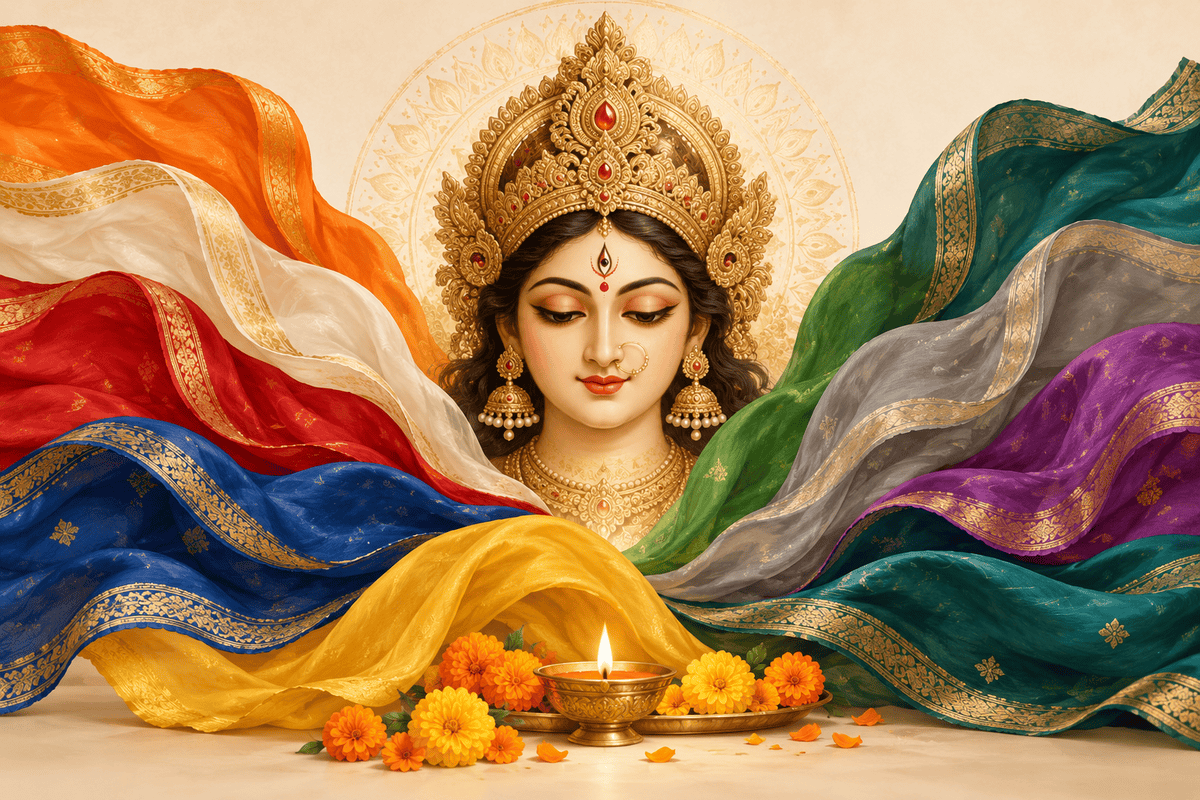
Some festive preparations begin with a shopping list. For Navratri, they often begin with a question: “What colour are we wearing tomorrow?”
An orange dupatta for the first morning, a white kurta for the next, and a splash of red after that—following the daily colours can turn even a familiar wardrobe into part of the celebration.
If you are planning your outfits for Shardiya Navratri 2026, this guide brings the dates, colours and traditional symbolism together, with simple ideas for making each shade your own.
When Is Shardiya Navratri in 2026?
Shardiya Navratri begins on Sunday, 11 October 2026. The nine-day colour calendar runs until Monday, 19 October, followed by Vijayadashami, or Dussehra, on Tuesday, 20 October.
The colour calendar is useful for festive dressing. For puja timings and observances such as Ashtami, Navami and fasting completion, follow a local panchang and your family’s tradition.
Navratri Colours 2026: The Complete Calendar
Day | Date | Weekday | Colour |
1 | 11 October 2026 | Sunday | Orange |
2 | 12 October 2026 | Monday | White |
3 | 13 October 2026 | Tuesday | Red |
4 | 14 October 2026 | Wednesday | Royal Blue |
5 | 15 October 2026 | Thursday | Yellow |
6 | 16 October 2026 | Friday | Green |
7 | 17 October 2026 | Saturday | Grey |
8 | 18 October 2026 | Sunday | Purple |
9 | 19 October 2026 | Monday | Peacock Green |
Save this calendar before the festivities begin so that planning the next day’s outfit takes one less decision.
What Do the Nine Navratri Colours Represent?
The meanings below describe customary symbolism. The outfit and décor ideas are suggestions for celebrating creatively.
Day 1: Orange — 11 October
Orange is associated with warmth, enthusiasm and positive energy.
Begin with one cheerful detail: an orange stole over a neutral kurta, a rust-orange saree or a bright pair of earrings. For festive décor, a small arrangement of orange flowers can carry the theme without filling every corner.
Day 2: White — 12 October
White traditionally represents purity, innocence and inner peace.
A white cotton kurta, ivory saree or simple white shirt works well for a quieter festive look. Add silver jewellery or a textured dupatta if you want some detail. You can also use a white table runner as a backdrop for your festive arrangement.
Day 3: Red — 13 October
Red symbolises love, passion and vitality. It is also a familiar colour for the chunri offered to the Goddess.
Choose a red dupatta, blouse or pocket square if a full red outfit feels too bold. A small red accent can become the focus of your look, especially against cream or beige.
Day 4: Royal Blue — 14 October
Royal blue carries associations of richness and tranquillity.
Try a royal blue kurta with understated accessories, or pair a blue saree with a blouse you already own. For an evening gathering, a blue stole over a simple outfit can bring a festive finish with very little preparation.
Day 5: Yellow — 15 October
Yellow is associated with optimism, warmth and joy.
Bring it into your day through a mustard kurta, a yellow scarf or a printed saree. If bright yellow is outside your usual style, choose a softer shade. Small yellow accents in a rangoli can also carry the day’s theme.
Day 6: Green — 16 October
Green represents nature, growth, serenity and new beginnings.
A green blouse, bangles or an embroidered dupatta can refresh an outfit you have worn before. Choose bottle green, leaf green or another shade that feels comfortable. For décor, reuse green fabric or paper decorations rather than buying a new set.
Day 7: Grey — 17 October
Grey is associated with emotional balance and a grounded outlook.
This is a good day to bring a quieter shade into your festive wardrobe. Pair a grey saree or kurta with silver accessories or a colourful border. Texture, embroidery and fabric can make the outfit feel festive without a bright base colour.
Day 8: Purple — 18 October
Purple traditionally symbolises grandeur, nobility and luxury.
Try a plum dupatta, purple kurta or amethyst-coloured accessories. A single purple element can give an existing outfit a different character. For a festive table, a folded purple cloth can serve as a simple decorative accent.
Day 9: Peacock Green — 19 October
Peacock green, a blend of blue and green, is associated with individuality, compassion and freshness.
Close the colour calendar with a teal-toned saree, stole or accessory. Since shops may label similar shades differently, look for the blue-green family rather than worrying about an exact match.
Why Do Navratri Colours Change Every Year?
The popular colour sequence begins according to the weekday on which Navratri starts. The remaining colours follow a set cycle. When the starting weekday changes, the dates attached to the shades change too.
The practice is particularly popular in Gujarat and Maharashtra. It is a festive custom, so households and communities may follow their own preferences.
How to Follow the Colour Calendar Without Buying Nine Outfits
Start with what you already own. Lay out your clothes and match them against the calendar before deciding whether you need anything else.
A dupatta, scarf, blouse or accessory can carry the day’s colour. You can also exchange pieces with family members, repeat a neutral outfit with different accents, or bring the shade into a small decorative arrangement.
Keep comfort in mind, especially if your plans include work, travel or an evening of Garba.
Frequently Asked Questions
What is the first colour of Navratri 2026?
What colour should I wear on the last day?
Do I need nine new outfits?
Is the colour calendar also a puja timetable?
Why Do Navratri Colours Change Every Year?
About the Author
Himanshu Mishra
@himanshu.mishra@paymeindia.in
View all posts →