
Pitru Paksha 2026 Food Rules: What to Eat, Avoid and Offer
❤️ Spread the Love
Pitru Paksha is a period of remembrance, gratitude and respect for one’s ancestors. In many Hindu families, food plays a central role in Shraddha, Tarpan and acts of charity performed during this period. But the food traditions followed during Pitru Paksha are not identical everywhere. They can differ according to region, community, family custom and the guidance of the priest conducting the ritual.
So, what can you eat during Pitru Paksha? Which foods are commonly avoided? And what may be prepared as an offering during Shraddha? This guide explains the widely followed practices while keeping those important differences in mind.
Why Food Matters During Pitru Paksha
The word Shraddha is associated with faith and sincerity. Food prepared for the observance is therefore treated with care, cleanliness and respect. Depending on the family tradition, a portion may be offered symbolically to the ancestors, served to invited priests or shared with people in need. Some families also follow the custom of feeding cows, crows, dogs or other living beings.
The purpose is not to prepare an elaborate feast or spend beyond one’s means. The emphasis is generally placed on remembrance, gratitude, simplicity and giving. A modest meal prepared sincerely can carry more meaning than an expensive spread made only for display.
What Can You Eat During Pitru Paksha
Many households prefer simple, freshly prepared vegetarian meals during Pitru Paksha. The exact menu varies, but the following foods are commonly included in satvik meals and Shraddha preparations.
Freshly cooked grains
Rice and wheat-based preparations are commonly used, although the grain chosen may depend on the Tithi, fast and family custom.
Simple dals and legumes
Plain preparations made with permitted dals may be included. Some communities avoid particular pulses, so the household tradition should be checked first.
Seasonal vegetables
Fresh vegetables cooked with mild spices are usually preferred. Families may maintain their own list of vegetables considered suitable for the ritual meal.
Milk and dairy products
Milk, curd, ghee and preparations such as kheer are commonly associated with Shraddha meals, provided they suit the family’s practice and dietary needs.
Fruits
Fresh seasonal fruits may be offered or eaten, especially by people who are fasting or keeping their diet light.
Simple sweets
Homemade kheer, halwa or other traditional sweets may be prepared. Recipes and ingredients differ widely across regions.
Foods Commonly Avoided During Pitru Paksha
Many people choose a satvik diet during Pitru Paksha, particularly on the day of Shraddha. The following items are commonly avoided, though the duration and strictness of the restriction depend on the household.
Non-vegetarian food
Meat, fish and eggs are generally avoided by families observing traditional food discipline during this period.
Alcohol and intoxicants
Alcohol, tobacco and other intoxicating substances are commonly excluded because the observance is associated with restraint and a calm state of mind.
Onion and garlic
Many households avoid onion and garlic while preparing a satvik Shraddha meal. This is a religious dietary practice, not a statement about their nutritional value.
Stale or reheated food
Freshly cooked food is usually preferred. Leftovers or food stored for a long time may be avoided for the ritual meal.
Overly processed food
Packaged snacks and highly processed dishes are often left out in favour of simple home-cooked food.
Food prepared carelessly
Clean ingredients, utensils and cooking spaces are considered important. Food meant for an offering is usually not tasted before the offering in families that follow this rule.
What Food Is Offered During Shraddha
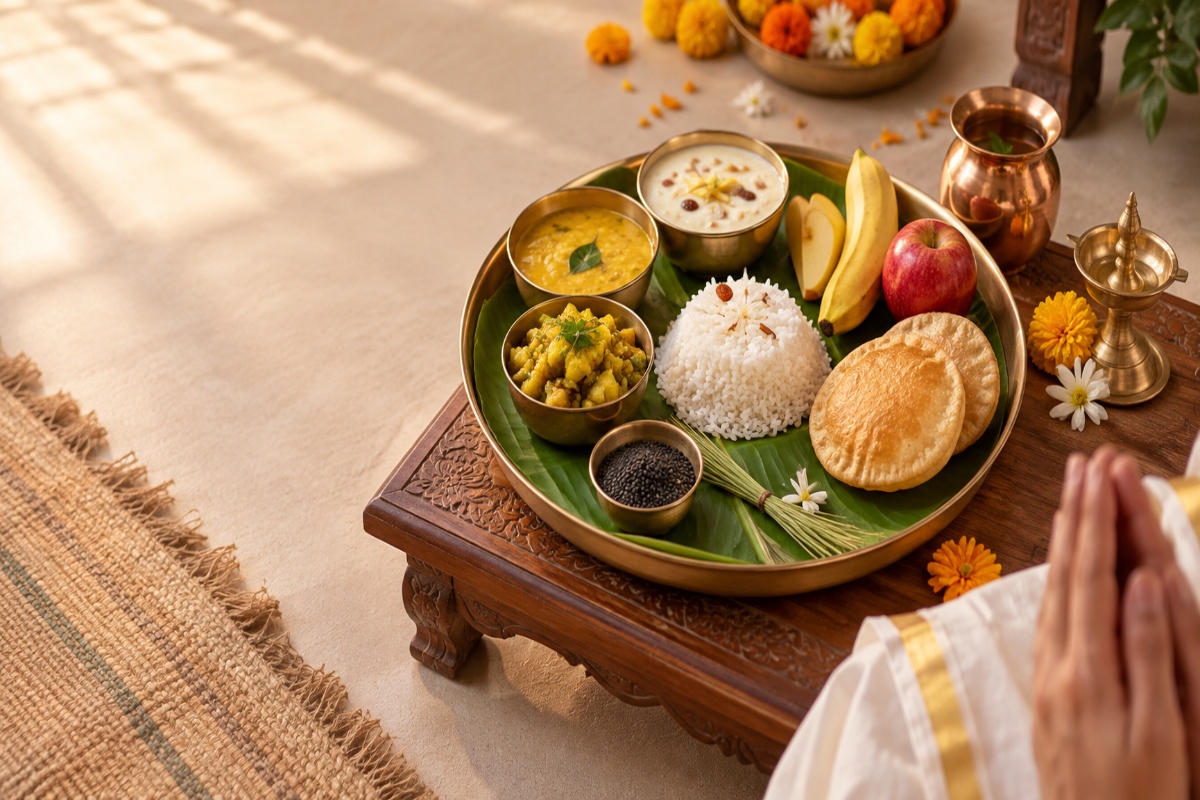
There is no single Shraddha menu followed by every Hindu family. A traditional meal may include rice, dal, seasonal vegetables, puri or roti, curd, ghee and a sweet dish such as kheer. Black sesame seeds are also used in many Tarpan and Pind Daan traditions. In some households, dishes remembered as favourites of the departed family member are prepared, provided they fit the ritual rules being followed.
Pinda, an offering commonly associated with Shraddha and Pind Daan, may be prepared from rice or flour with ingredients prescribed by the family tradition. Because the method and ingredients can vary, it is better to follow the guidance of a knowledgeable priest rather than rely on a generic online recipe for a formal ritual.
Who Is Traditionally Offered Food
Practices differ, but food may be offered or distributed in several ways after the ritual.
A symbolic portion may be offered to the ancestors according to the Shraddha procedure.
Food may be served to invited priests where this forms part of the family custom.
Meals, groceries or other essentials may be donated to people in need.
Some households feed cows, crows, dogs, ants or other living beings as part of Panchabali or a related custom.
Food should be placed safely and responsibly. Do not leave plastic, spoiled food or large quantities in public areas. When feeding animals or birds, choose food that is safe for them and avoid creating litter or causing harm.
Can You Eat Normally During Pitru Paksha
Yes. Pitru Paksha is not observed as a continuous fast by everyone. Many people eat regular vegetarian meals while avoiding specific ingredients. Others follow restrictions only on the day they perform Shraddha. Some may fast partially or eat one simple meal according to their family’s practice.
Children, older adults, pregnant people and anyone managing a medical condition should not follow restrictive fasting without appropriate medical advice. Religious observance should not come at the cost of health.
Simple Food Guidelines for the Shraddha Day
Confirm the correct Tithi and the ritual method followed by your family.
Clean the kitchen, cooking area and utensils before beginning.
Use fresh ingredients and prepare only a practical quantity of food.
Keep the meal simple and follow the ingredient restrictions observed in your household.
Complete the offering before serving the ritual food if this is part of your custom.
Share food respectfully and avoid unnecessary waste.
Do Food Rules Differ Across Families
Yes. One family may use a particular dal or vegetable while another may avoid it. Some families observe food restrictions throughout Pitru Paksha, while others apply them only on the relevant Shraddha Tithi. Regional calendars, sectarian traditions and inherited household customs can all influence the meal.
For this reason, a broad online list should not replace your family’s established practice. If you are performing Shraddha for the first time, speak to an elder in your family or a qualified priest familiar with your tradition.
Observe Pitru Paksha with Simplicity and Respect
Pitru Paksha food rules are best understood as part of a larger tradition of remembrance. Fresh vegetarian food, a calm household atmosphere, charity and respect for family customs are central to many observances. The exact dishes, ingredients and offering method, however, may differ from one family to another.
Instead of becoming anxious about every ingredient, focus on sincerity, cleanliness and responsible conduct. Confirm your Shraddha Tithi, follow the tradition appropriate to your family and seek knowledgeable guidance whenever you are unsure.
Frequently Asked Questions
Can we eat onion and garlic during Pitru Paksha?
Can we eat non-vegetarian food during Pitru Paksha?
Can we eat outside food during Pitru Paksha?
Which sweet is commonly prepared for Shraddha?
Is fasting compulsory during Pitru Paksha?
About the Author
Himanshu Mishra
@himanshu.mishra@paymeindia.in
View all posts →