
Vaikuntha Chaturdashi 2026: Why Are Lord Shiva and Lord Vishnu Worshipped Together?
❤️ Spread the Love
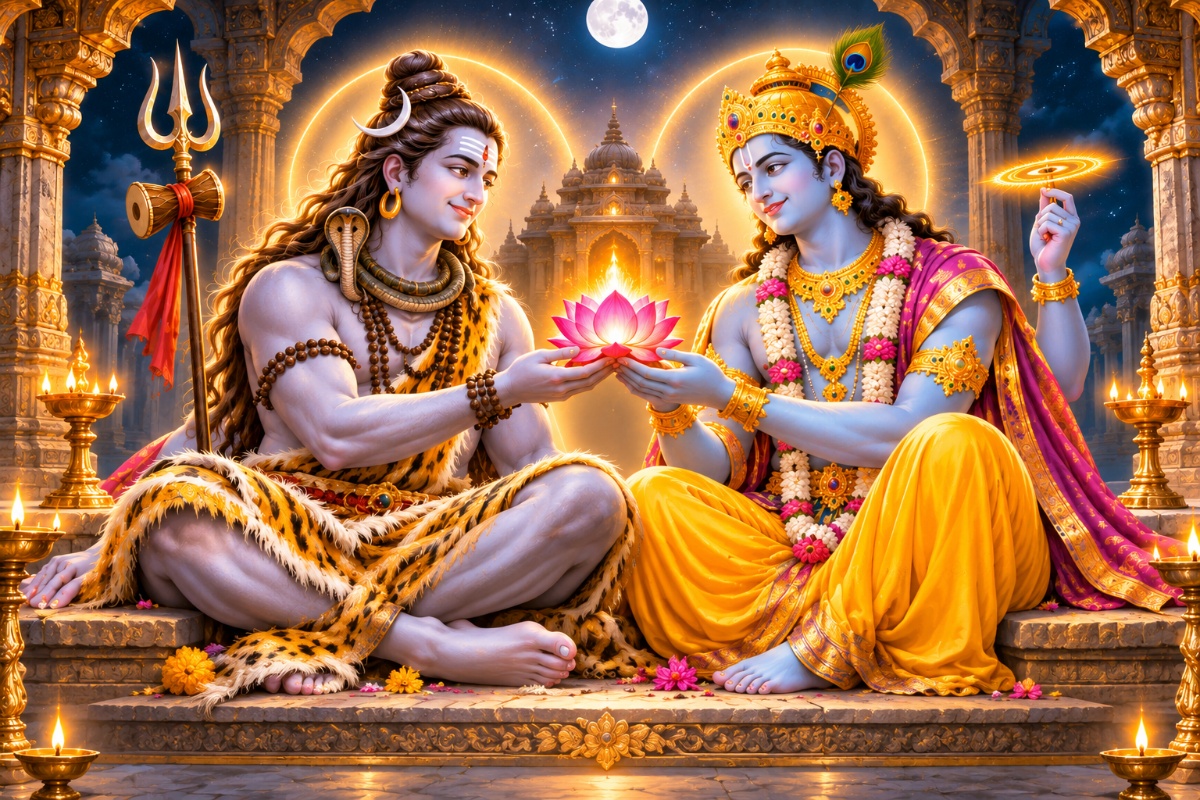
Hinduism is filled with fascinating traditions, but there is one special occasion when two of the most revered deities, Lord Shiva and Lord Vishnu, are worshipped together. This occasion is known as Vaikuntha Chaturdashi, a sacred festival that celebrates the divine connection between Hari (Lord Vishnu) and Hara (Lord Shiva).
Observed during the Shukla Paksha Chaturdashi of the Kartik month, Vaikuntha Chaturdashi holds special religious significance for devotees of both deities. The festival is particularly celebrated in Varanasi, Rishikesh and several other parts of India.
One of the most fascinating aspects of this occasion is the legendary story of Lord Vishnu offering one of his own eyes to Lord Shiva when he could not find the thousandth lotus flower during his worship.
But why are these two deities worshipped together? What is the story behind this unique tradition, and what rituals should devotees follow?
Let's explore the significance, mythology and puja rituals of Vaikuntha Chaturdashi 2026.
Also Read: Getting Married in 2026? Check These Auspicious Dates
When Is Vaikuntha Chaturdashi 2026?
In 2026, Vaikuntha Chaturdashi will be observed on Monday, November 23, 2026.
The festival falls on Kartik Shukla Chaturdashi, one day before Kartik Purnima, which is also celebrated as Dev Diwali in Varanasi.
According to the New Delhi Panchang:
Vaikuntha Chaturdashi: November 23, 2026 (Monday)
Chaturdashi Tithi Begins: 2:36 AM, November 23
Chaturdashi Tithi Ends: 11:42 PM, November 23
Nishita Kaal Puja: 11:41 PM to 12:35 AM (November 24)
Note: Puja timings may vary depending on the location. Devotees should consult their local Panchang for accurate timings.
Why Are Lord Shiva and Lord Vishnu Worshipped Together on Vaikuntha Chaturdashi?
Vaikuntha Chaturdashi represents the spiritual unity of Lord Shiva and Lord Vishnu. Although both deities are worshipped in different traditions throughout the year, this occasion holds a special place because devotees honour both on the same day.
According to Hindu beliefs, Lord Vishnu represents the preservation of the universe, while Lord Shiva represents transformation and destruction. Both are considered essential aspects of the cosmic cycle.
The festival conveys the message that there is no division between Hari and Hara. Instead, both represent different expressions of the same supreme divine reality.
In some traditions, this divine connection is also celebrated through the exchange of offerings. Tulsi leaves, usually associated with Lord Vishnu, are offered to Lord Shiva, while Bilva leaves, traditionally associated with Lord Shiva, are offered to Lord Vishnu.
This exchange symbolises mutual respect, devotion and the unity of the two deities.
Also Read: What Is Navamsa Chart (D9) in Vedic Astrology?
The Mythological Story Behind Vaikuntha Chaturdashi
One of the most popular legends associated with Vaikuntha Chaturdashi is mentioned in the Shiva Purana tradition.
According to the story, Lord Vishnu once visited Kashi to worship Lord Shiva. He decided to offer 1,000 lotus flowers to Lord Shiva while chanting his thousand names.
Lord Vishnu had made a promise to complete the worship with all 1,000 flowers. However, as the ritual progressed, he discovered that one lotus flower was missing. Lord Shiva, who wanted to test Lord Vishnu's devotion, had hidden one of the flowers.
Lord Vishnu was also known as Kamal Nayan, meaning the one with lotus-like eyes. Without hesitation, he decided to offer one of his own eyes in place of the missing lotus.
Moved by Lord Vishnu's extraordinary devotion, Lord Shiva appeared before him and stopped him from making the sacrifice. Pleased with his dedication, Lord Shiva restored his eye and gifted him the powerful Sudarshana Chakra.
The Sudarshana Chakra became one of Lord Vishnu's most important divine weapons. This legend highlights the depth of devotion between the two deities and explains why Vaikuntha Chaturdashi is considered a special occasion for worshipping both Lord Shiva and Lord Vishnu.
Also Read: Why Do You Keep Seeing 11:11?
Vaikuntha Chaturdashi 2026: Puja Rituals and Traditions
Devotees observe Vaikuntha Chaturdashi with prayers, fasting, temple visits and special offerings. While rituals may differ across regions, some traditional practices are commonly followed.
1. Take an Early Morning Bath
Devotees traditionally wake up early and take a holy bath before beginning their prayers. In Varanasi, taking a dip at Manikarnika Ghat is considered particularly significant on this occasion.
This ritual is associated with spiritual purification and devotion.
2. Worship Lord Shiva and Lord Vishnu
Devotees offer prayers to both deities on this auspicious day. Lord Vishnu is traditionally worshipped during Nishita Kaal, while Shiva devotees may perform their worship around Arunodaya, the period before sunrise.
3. Offer Lotus Flowers to Lord Vishnu
Offering lotus flowers is an important tradition associated with the mythology of Vaikuntha Chaturdashi.
Some devotees offer 1,000 lotus flowers while reciting the Vishnu Sahasranama, which contains the thousand names of Lord Vishnu.
4. Offer Tulsi and Bilva Leaves
The exchange of sacred leaves is one of the most distinctive traditions of this festival.
Tulsi leaves are offered to Lord Shiva.
Bilva or Bael leaves are offered to Lord Vishnu.
This practice symbolises the spiritual connection and mutual reverence between Hari and Hara.
5. Light Diyas and Perform Evening Prayers
Lighting diyas is another important devotional practice during the Kartik month.
Devotees light lamps in temples and homes and pray for peace, prosperity and spiritual well-being.
6. Observe Fasting and Chant Mantras
Some devotees observe a fast and spend the day in prayer and meditation. Chanting the names of Lord Vishnu and Lord Shiva is also considered an important part of the observance.
Devotees may recite Vishnu Sahasranama, Shiva mantras and other sacred prayers according to their family traditions.
Where Is Vaikuntha Chaturdashi Celebrated?
Vaikuntha Chaturdashi is observed in several parts of India, but it has special significance in certain pilgrimage destinations.
Varanasi: The festival is particularly important at Kashi Vishwanath Temple. Devotees participate in special rituals, and the traditional Manikarnika Snan attracts pilgrims.
Ujjain: The occasion is associated with Hari-Hara Milan, symbolising the divine meeting of Lord Shiva and Lord Vishnu. The traditional celebrations at Mahakaleshwar and Gopal Mandir are particularly significant.
Rishikesh: Devotees observe the occasion through prayers, temple visits and religious activities dedicated to both deities.
These celebrations highlight the importance of Vaikuntha Chaturdashi in different regional traditions.
Spiritual Significance of Vaikuntha Chaturdashi
Beyond its rituals and mythology, Vaikuntha Chaturdashi carries an important spiritual message.
The festival reminds devotees that different forms of worship can lead towards the same divine truth. Lord Shiva and Lord Vishnu may have different roles in Hindu mythology, but their relationship represents harmony rather than separation.
The story of Lord Vishnu offering his eye to Lord Shiva also teaches the importance of sincerity, dedication and complete faith in devotion.
For devotees, this occasion is an opportunity to seek spiritual growth, inner peace and divine blessings through prayers to both deities.
Conclusion
Vaikuntha Chaturdashi is more than just a religious occasion. It celebrates the eternal connection between Lord Shiva and Lord Vishnu while reminding devotees of the importance of faith, devotion and spiritual harmony.
The beautiful story of Lord Vishnu offering his own eye to Lord Shiva continues to inspire devotees and makes this festival particularly meaningful.
As Vaikuntha Chaturdashi 2026 approaches, devotees can observe the occasion through prayers, traditional offerings and remembrance of the divine bond between Hari and Hara.
Frequently Asked Questions
When is Vaikuntha Chaturdashi in 2026?
Why are Lord Shiva and Lord Vishnu worshipped together on this day?
What should devotees offer on Vaikuntha Chaturdashi?
What is the significance of 1,000 lotus flowers on Vaikuntha Chaturdashi?
Is fasting observed on Vaikuntha Chaturdashi?
About the Author
Himanshu Mishra
@himanshu.mishra@paymeindia.in
View all posts →