
Why Is Garba Performed in a Circle? The Meaning Behind Navratri’s Most Joyful Tradition
❤️ Spread the Love
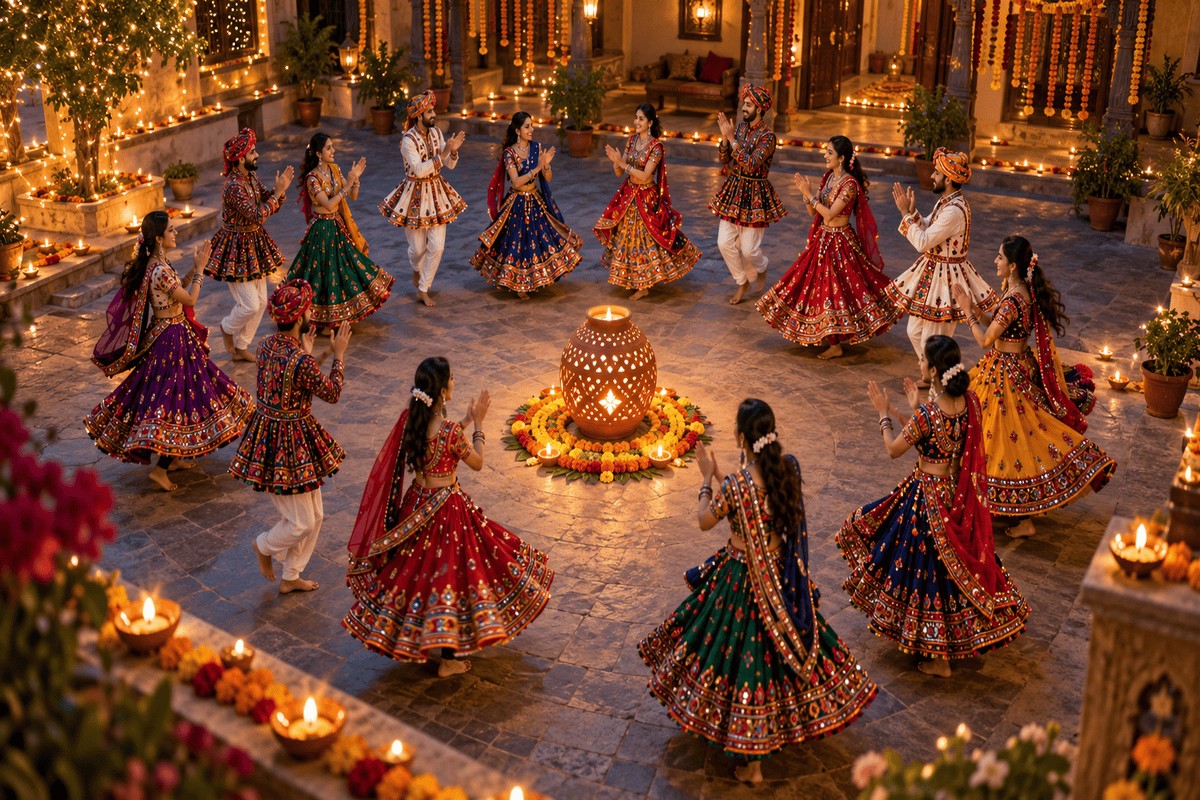
Before a Garba evening begins, there is usually a little chaos. Someone is adjusting a dupatta. Someone is calling the friend who promised to arrive early. A first-timer is studying everyone’s feet, quietly hoping the steps will make sense once the music starts.
Then the clapping begins. The circle moves. Within minutes, strangers are following the same rhythm.
It is a familiar Navratri scene. Yet, while our eyes follow the dancers, an important part of the tradition sits at the centre: a sacred lamp or an image of Maa Amba.
Why does everyone dance around it? The answer takes us into the relationship between devotion, creation and the changing nature of life.
What Does Garba Actually Mean?
The word Garba is associated with the Sanskrit word garbha, meaning “womb.” This connection places creation and the nurturing of life at the heart of the tradition. A womb holds the beginning of life. In Garba’s spiritual imagery, that idea connects with the divine feminine: the power through which life emerges and continues.
During Navratri, devotees worship the Goddess as Shakti. Garba allows people to express that reverence through singing, clapping and movement. For someone joining the celebration, knowing this meaning changes a small detail. Each clap becomes part of a tradition rooted in gratitude for life and the power that sustains it.
Also Read: Why Is This Tree Worshipped on Dussehra?
The Meaning of the Lamp at the Centre
Traditionally, Garba is performed around a perforated earthen pot containing an oil lamp, or around an image of the mother goddess Amba. The Sangeet Natak Akademi documents both forms.
The lamp and its earthen vessel are associated with the garbha deep tradition. Their symbolism brings together the ideas of the womb, creation, and the light of life.
Imagine the scene before bright stage lights take over: a clay vessel, a flame within it and small openings through which the light reaches the people gathered around.
It is a simple image with room for reflection. A devotee may see that light as a reminder of the Goddess’s presence. Another person may find themselves thinking about the life held within something ordinary and fragile.
These personal reflections can deepen the experience without becoming rules that every participant must follow.
Also Read: Why Do We Bid Farewell to Maa Durga After Welcoming Her?
Why Is Garba Performed in a Circle?
The circular formation carries a traditional spiritual interpretation: the continuing cycle of birth, death and rebirth.
As dancers move around the centre, their movement expresses change. The Goddess at the centre represents an enduring divine presence within that changing cycle.
This symbolism feels close to everyday experience.
Families grow. Children leave home. Responsibilities shift. A year that begins with careful plans can unfold in ways nobody expected.
We keep moving through these changes, often looking for something that helps us feel steady.
Seen through this lens, the Garba circle offers an image of life in motion, held around a spiritual centre.
Every dancer will experience it differently. Someone may arrive with gratitude. Someone may carry a private worry. Someone else may simply want an evening with friends.
Understanding the symbolism gives each of them something more to consider.
Why Garba Is Closely Connected With Navratri
Navratri centres on the worship of Shakti, making Garba a natural expression of the festival’s devotional spirit.
UNESCO describes Garba as a ritualistic and devotional dance performed during Navratri. Gujarat Tourism also describes community worship followed by music and circular dancing.
Prayer and celebration belong to the same evening.
That connection matters because devotion can take many forms. Some people feel closest to the Goddess during a quiet aarti. Others connect through a familiar song, especially when everyone around them knows its words.
Garba creates space for that shared expression.
A prayer that began with folded hands can continue through movement, carried by the rhythm of the group.
Also Read: Kanya Pujan on Ashtami or Navami?
The Songs Carry Their Own Stories
Listen closely to traditional Garba songs and another layer of the celebration begins to emerge.
Many invoke the Goddess and seek her blessings. Others carry expressions of hope and everyday feeling, with imagery drawn from nature and the seasons.
The ICH Courier’s account of Garba describes these songs as part of a living oral tradition, carrying values and experiences across generations.
That helps explain why a familiar song can feel so powerful.
You may remember hearing it at home, watching an older relative sing along or struggling through its steps as a child.
Years later, the opening lines return, and so does that memory.
Through songs, the festival carries pieces of family and community history into another Navratri. The celebration continues, carrying familiar prayers into another changing year.
A Circle That Makes Room for People
There is a lovely moment at many community celebrations: someone hesitates at the edge, watches a few rounds and finally joins.
A dancer nearby demonstrates the step. The newcomer misses a turn, laughs and tries again.
Such moments help explain Garba’s participatory character. The tradition depends on people sharing their knowledge and making room for others.
Dancers, singers, musicians, craftspeople and organisers all contribute. Children learn by watching. Friends practise together. Families pass on songs and customs.
UNESCO recognises Garba’s role in strengthening community bonds. In 2023, Garba of Gujarat was inscribed on its Representative List of the Intangible Cultural Heritage of Humanity.
Behind that recognition are countless people keeping the tradition alive through participation.
Look Towards the Centre This Navratri
Learning Garba’s meaning does not require you to spend the evening analysing every step.
Enjoy the music. Wear the outfit you have been planning. Take photographs with your friends. Laugh when you lose the rhythm.
But pause, once, to notice the centre around which everyone is moving.
Remember the lamp, the idea of creation and the faith that has brought generations into this circle.
Perhaps that thought will stay with you when the music ends.
And next Navratri, when the first familiar song begins, you may find yourself stepping forward with a little more understanding of what you are joining.
Frequently Asked Questions
What is the spiritual significance of Garba?
Why is Garba performed in a circle?
What does the word Garba mean?
What is the significance of the lamp used during Garba?
How is Garba different from Dandiya?
About the Author
Himanshu Mishra
@himanshu.mishra@paymeindia.in
View all posts →