Still Wearing That Old Kalawa? Here's What You Should Know
❤️ Spread the Love
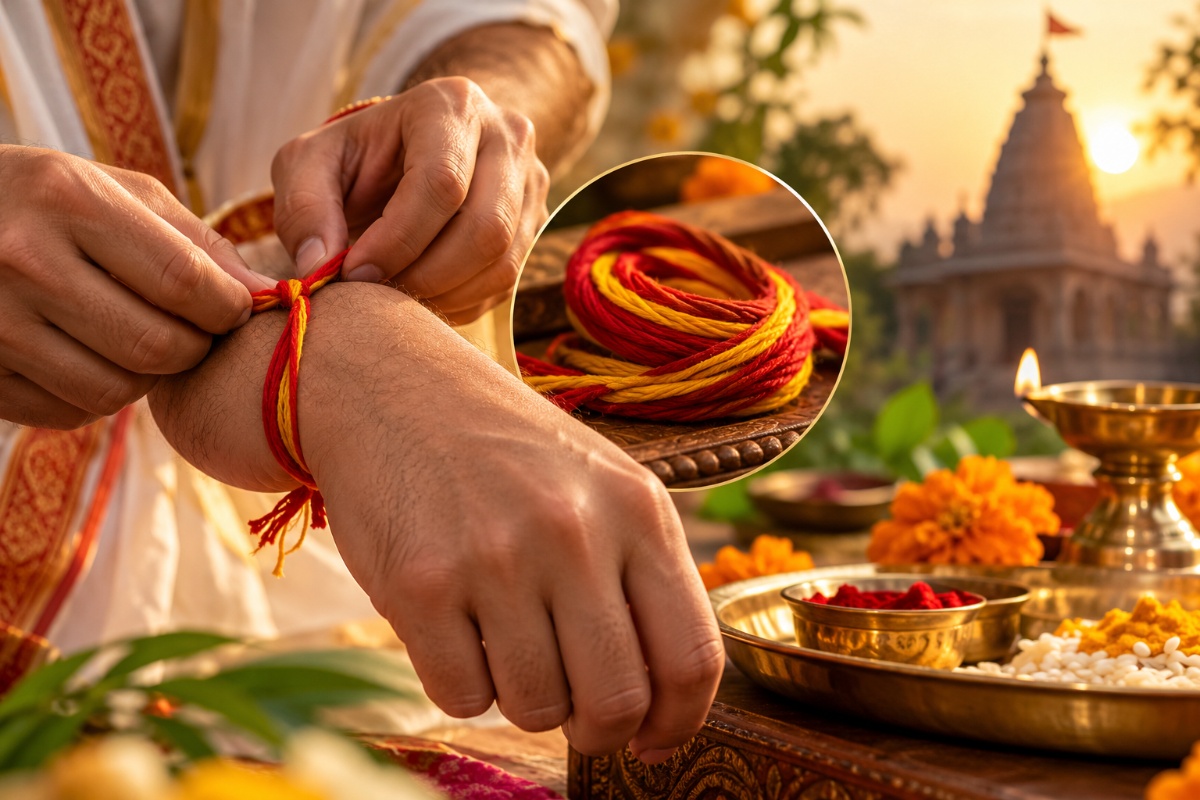
Think about the last time you visited a temple or attended a puja. Chances are, a priest tied a red or red-and-yellow thread around your wrist. You accepted it with folded hands, perhaps made a silent prayer, and went about your day.
Weeks passed. The thread faded, became loose, or started to fray. Yet you continued wearing it.
Why? Because somewhere in the back of your mind, you wondered whether removing a sacred thread might be considered disrespectful or inauspicious.
That little thread, known as Kalawa, Mauli, or Raksha Sutra, carries centuries of religious symbolism. But an interesting question remains: Does a sacred thread need to be changed, and what happens when you wear it for too long?
Let's explore the beliefs, cultural traditions, and commonly followed rules surrounding Kalawa.
Also Read: Bhakoot Dosha in Kundli Matching: Should You Be Worried?
What Makes Kalawa More Than an Ordinary Thread?
In Hindu religious practices, Kalawa is traditionally tied around the wrist during pujas, havans, weddings, and other auspicious ceremonies.
The word Raksha Sutra translates to a thread of protection. It represents a prayer for divine blessings, well-being, and protection from negative influences.
However, its meaning extends beyond protection.
When a priest ties Kalawa during a religious ceremony, the thread often accompanies a Sankalp, or sacred intention. This may represent a prayer, a promise, or a commitment made during worship.
In that sense, Kalawa becomes a physical reminder of a spiritual intention.
Every time you notice the thread on your wrist, it can remind you of the prayer you offered and the values you wished to follow.
The Forgotten Question: How Long Should You Actually Wear Kalawa?
One of the most frequently discussed beliefs surrounding Kalawa concerns how long it should remain on the wrist.
According to certain popular religious traditions, Kalawa may be changed after approximately 21 days.
Some people believe the thread should be renewed periodically because it has been exposed to everyday activities, water, dust, and wear.
However, there is an important distinction to understand.
The 21-day period is a commonly reported religious belief, not a universally established rule followed by every Hindu community.
In some families, the thread is replaced during the next major puja. Others continue wearing it until it becomes loose or naturally wears out.
The appropriate time may therefore depend on regional customs, family traditions, and the religious ceremony during which the thread was tied.
Five Signs It May Be Time to Change Your Kalawa
Although traditions differ, certain situations may indicate that the sacred thread should be replaced.
1. The Thread Has Become Dirty
Kalawa is traditionally made from cotton, which can absorb moisture and collect dirt.
If the thread has become noticeably dirty through daily activities, replacing it is a reasonable way to maintain personal hygiene while respecting its religious significance.
2. The Colour Has Completely Faded
Traditional Kalawa commonly features red and yellow shades.
Some families prefer changing the thread when its colours have substantially faded. This is a customary preference rather than proof that its spiritual significance has disappeared.
3. The Thread Is Beginning to Break
A frayed or damaged Kalawa is another reason people choose to replace it.
Rather than treating a broken thread as a warning of misfortune, it is better understood as ordinary wear. There is no need to assume something unfortunate will happen.
4. You Are Performing a New Religious Ceremony
Many Hindu households tie a fresh Kalawa during important rituals, festivals, or family ceremonies.
The new thread can symbolise a renewed prayer, blessing, or spiritual intention.
5. The Thread Has Become Uncomfortable
A sacred thread should never cause physical discomfort.
If Kalawa becomes too tight, irritates the skin, or causes redness, it should be loosened or removed. Religious respect does not require ignoring physical well-being.
Which Day Is Considered Auspicious for Changing Kalawa?
In several North Indian traditions, Tuesday and Saturday are regarded as suitable days for replacing Kalawa.
These preferences are often associated with local religious customs and practices.
However, not all communities follow the same days. Some people change their Kalawa immediately after a religious ceremony, while others replace it during their next visit to a temple.
There is no need to fear removing a dirty, damaged, or uncomfortable thread on another day.
If you are following a specific family ritual, consulting the priest who performed the ceremony can help clarify the appropriate custom.
Right Hand or Left Hand: Does It Really Matter?
Another commonly discussed rule concerns the wrist on which Kalawa should be tied.
In several traditional practices:
Men wear Kalawa on the right wrist.
Unmarried women may wear it on the right wrist.
Married women may wear it on the left wrist.
These conventions are particularly familiar in some North Indian households.
However, Hindu traditions are diverse, and practices may change depending on the region, community, and occasion.
Rather than presenting one arrangement as mandatory for everyone, it is more accurate to acknowledge these differences.
The intention behind the ritual is generally considered more significant than treating every regional practice as a universal requirement.
Also Read: Can Your Name Sign and Birth Sign Be Different?
The Story of King Bali and the Sacred Thread
One traditional explanation of the significance of Raksha Sutra is associated with King Bali and Lord Vishnu's Vamana avatar.
According to a popular religious narrative, King Bali demonstrated extraordinary devotion and generosity when Lord Vishnu appeared before him in the form of Vamana.
Traditional retellings associate a protective sacred thread with the blessings granted to Bali.
This connection is reflected in a well-known mantra recited while tying a protective thread:
येन बद्धो बली राजा दानवेन्द्रो महाबलः।
तेन त्वामनुबध्नामि रक्षे मा चल मा चल॥
The mantra invokes the protective bond associated with the powerful King Bali and expresses a wish that the sacred protection remain steadfast.
The story helps explain why Kalawa represents devotion, blessings, and a spiritual bond rather than merely decoration.
What Should You Do With an Old Kalawa?
This is where many people become uncertain.
If Kalawa is considered sacred, is it appropriate to throw it away after removing it?
In several Hindu households, the old thread is disposed of respectfully rather than treated like ordinary household waste.
Some families place it in clean soil, while others follow traditions involving a sacred tree.
A practical and environmentally considerate option is to place a natural cotton thread in clean soil, provided it contains no synthetic fibres, plastic decorations, or other non-biodegradable materials.
Avoid releasing threads into rivers or other water bodies, as discarded materials can contribute to pollution. The underlying principle is simple: respect the religious sentiment without harming the environment.
Can Removing Kalawa Bring Bad Luck?
There is no reliable basis for claiming that removing an old Kalawa automatically brings misfortune.
Kalawa is traditionally viewed as a symbol of faith and blessings, not as an object that mechanically controls events in someone's life.
Different religious communities follow different customs concerning its removal.
A person who respectfully replaces a worn-out thread should not feel compelled to interpret the act as an invitation to negative energy.
Spiritual traditions can be followed with devotion without creating unnecessary fear.
The Real Meaning of Kalawa Is Often Overlooked
In a world where people look for spiritual protection through gemstones, rituals, and sacred objects, Kalawa stands out for its simplicity.
It does not need to be expensive or elaborate.
Its importance lies in what it represents: faith, blessings, intention, and the relationship between a devotee and their spiritual tradition.
Whether you replace it after 21 days, during the next puja, or when it becomes worn out, its symbolic significance comes from the devotion associated with it.
A sacred thread may eventually fade, but the intention behind the prayer does not have to. For more insights into Hindu rituals, spiritual beliefs, and traditional practices, explore Viranchi.
Also Read: Ahoi Ashtami 2026: Know the Correct Date, Puja Muhurat, Vrat Vidhi and Significance
Frequently Asked Questions
How many days should you wear Kalawa on your wrist?
Which day is considered auspicious for changing Kalawa?
What happens if you wear Kalawa for too long?
On which hand should men and women wear Kalawa?
What is the correct way to remove and dispose of old Kalawa?
About the Author
Himanshu Mishra
@himanshu.mishra@paymeindia.in
View all posts →